Thursday, 19 March 2015

Copyright and Permissions

As I am using archive footage and outsourcing my music by hiring a musician/ composer (Maya Law), I have researched the copyright issues that I may face.

http://www.desktop-documentaries.com/do-i-need-permission-to-use-file-footage-and-other-video-material.html
From this website, I found that archive footage is only legal if it is royalty free; however I visited the royalty free archive footage website and was unable to find any of my videos. Another article by this website suggested that I would need to get permission for the footage from the producers, just as I had from my musician to make it legal. As the main producer of my archive footage is a multi-national media conglomerate, Universal Music Group, it is clear that they would not be available to discuss copyright for my A level. Therefore, my next step was to investigate UK Fair Use laws, as the article suggested.

http://www.copyrightservice.co.uk/copyright/p09_fair_use
Fair Use is the idea that if copyright laws are too restrictive, it may stifle free speech, news reporting, or result in disproportionate penalties for inconsequential or accidental inclusion. Therefore they allow certain content to be legally used for these reasons. From researching the conditions, I found that it would be legal for me to use my archive footage as it falls under the following;
  • the quoted material is justified by my narration, and no more than necessary is included
  • I will mention the source of my quoted material, along with the name of the author (artist and production studio)
  • it is used for the purpose of news reporting and education, as this is the purpose of the documentary genre
  • it falls under education use as my A level coursework
This has resolved my concerns with copyrighted footage, therefore from this point I will add the credits to my archive footage to ensure that it is legal.

Finally, for shooting within my public setting, I spoke to the assistant manager of the Forum library on her floor to describe my production, and receive spoken permission to shoot within this location.

Adding Statistics to my Documentary

After showing my documentary to my teacher for feedback, it was recommended that I added statistics about sexism within the media to make my documentary more informative and visually stimulating.

Therefore I referred back to my research of this and found a useful statistic about female production roles within the film and TV industries which is appropriate to overlay for Mr Mooney's interview which is quite visually bare, and discusses this exact topic, allowing me to enhance this discussion. Furthermore, this information from a reliable source increases his credibility as an expert interviewee. However as the statistic is outdated (2012), I revisited the website http://www.wftv.org.uk/resources/reports-and-statistics for an updated version.

"In 2013-14, women comprised 26% of all directors, writers, producers, executive producers, editors, and cinematographers. This is even with the figure from 2011-12 and up 2 percentage points from 24% in 2008-09." - Martha Laurzen, 'Independent Women'

"Fewer than 9% of the UK’s film directors are female." - Melody Bridges, 'Why Aren't There More Women Director's In The UK Film And TV Industry?', Women in Film and Television UK

I also found information which is also relevant to the UK, and relates to the next steps for equality of production roles which Mr Mooney discussed;
"Directors UK have published a report that sets out recommendations for production companies and broadcasters to increase the employment of women directors in UK television production.  The ambition is to work with production companies and broadcasters so that in 2017 women are directing 30% of all original programmes broadcast."

I will be using all of these statistics within the final section of my documentary, but make them shorter so that they are more concise to read. Furthermore, to emphasise Rowan's definitions of sexism and misogyny, allowing a firm knowledge of these key terms to understand my documentary for my audience, I'm adding their definitions in text. This also repairs the issue of jumping between clips where I had to split the shot between two takes, effecting the footage but not the audio.

Sexism: Prejudice, stereotyping, or discrimination, typically against women, on the basis of sex.
Misogyny: Dislike of, contempt for, or ingrained prejudice against women.
- Oxford Dictionary

Thursday, 12 March 2015

Evaluation

I've began writing my evaluation of my A2 portfolio and productions. Here is a link to my Wix account, where I will be posting my evaluation: courtneyodonnell97.wix.com/a2evaluation

Wednesday, 11 March 2015

Creating my Listings Magazine - Background

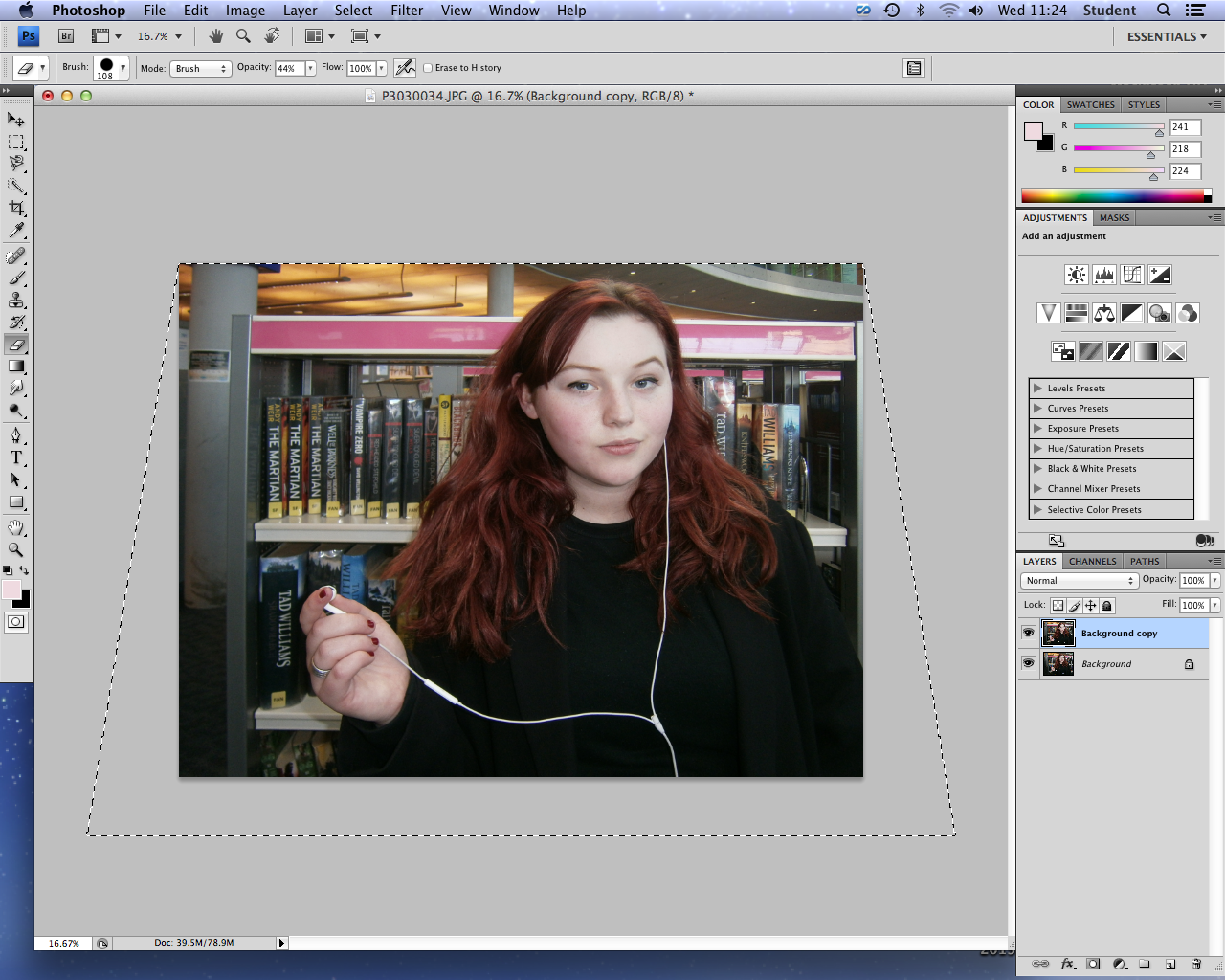
As I stated in my photography post that I would edit my two best images to test which is most appropriate for the listings magazine background, I began editing this image using Photoshop to blur and straighten the background to overlay, and enhance my model.
Straightening my image to create an aesthetically pleasing, professional straight background with the bookshelf.

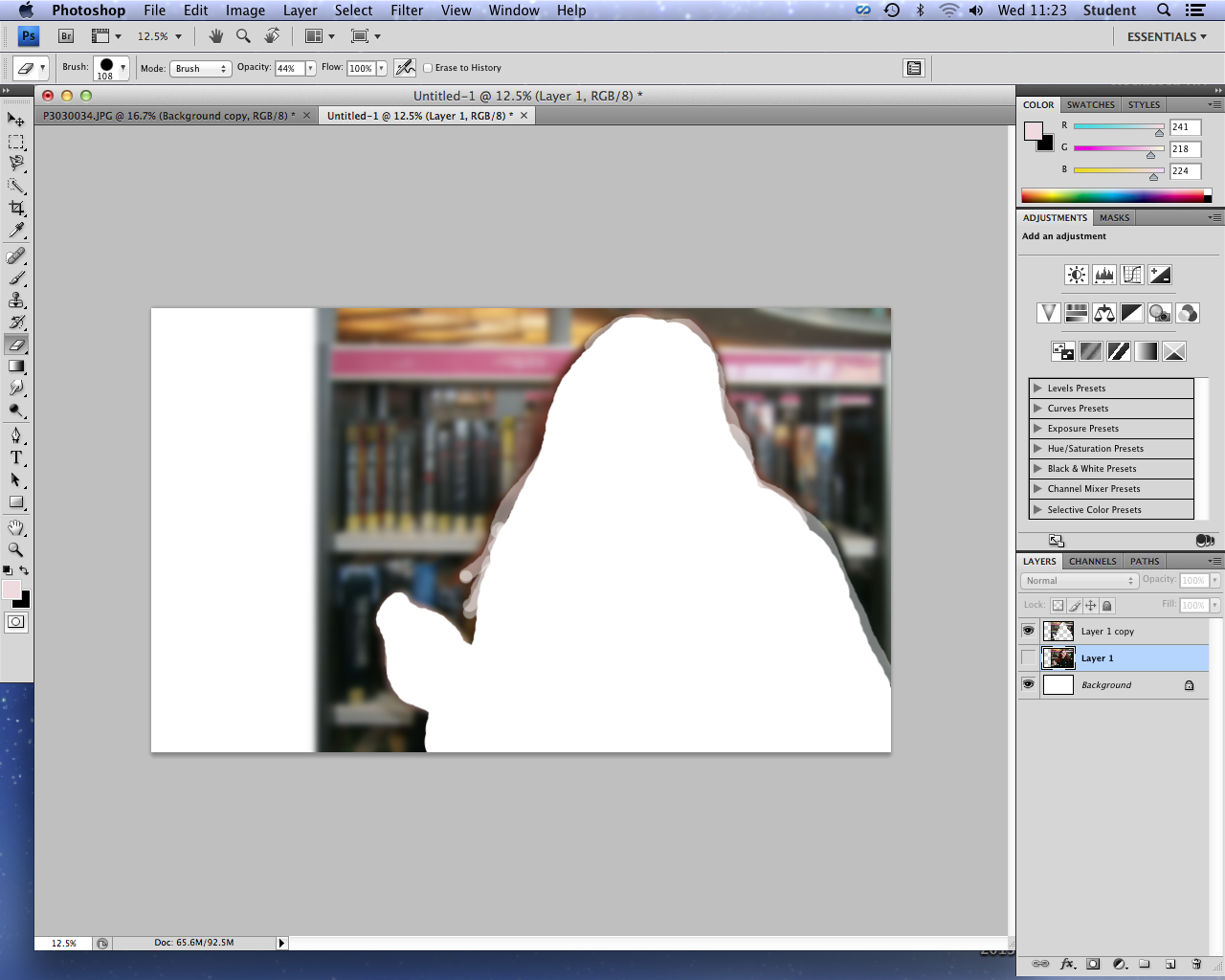
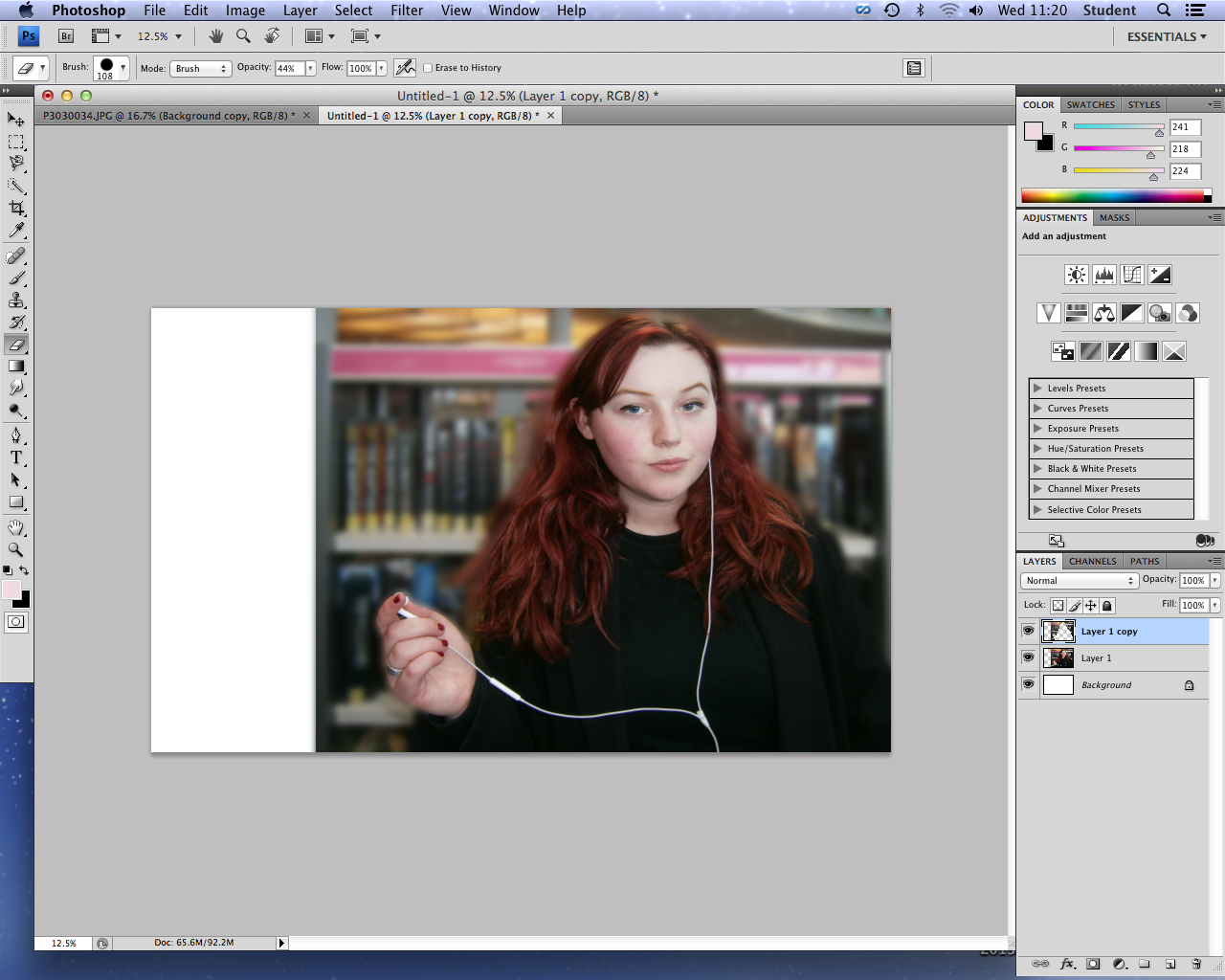
Adding my image to a larger canvas representing my double page spread, and adding a blur to form the blurred gradient grey background. I erased this blur around my model in order to make her the focal point.

Finished blurred image background.

However, I decided that the background of this image was in fact too busy in comparison to the sophisticated, simple backgrounds within the Radio Times listing magazine (my exhibitor). Although I had planned to draw the attention of young people with this boldly colourful background, and introduce the main library location of my documentary, I felt that my second image was more appropriate for reflecting the seriousness of my documentary, and for overlaying text clearly. Therefore considering the time scale and my inexperience with using Photoshop, I decided to use Picmonaey to edit my image and create my listings magazine, due to my accessibility and familiarity with this software, allowing me to use it to its greatest effect and produce a better product.

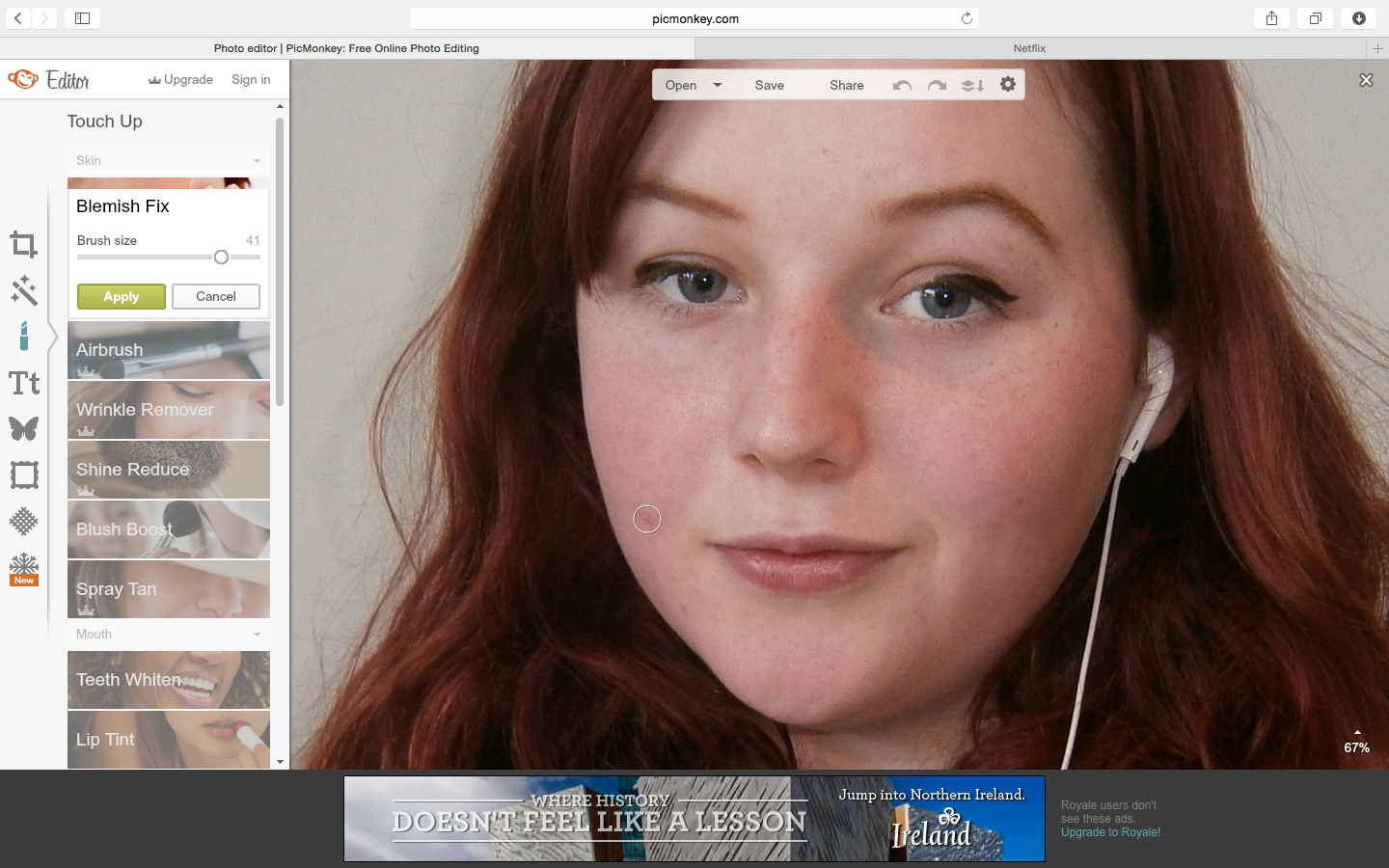
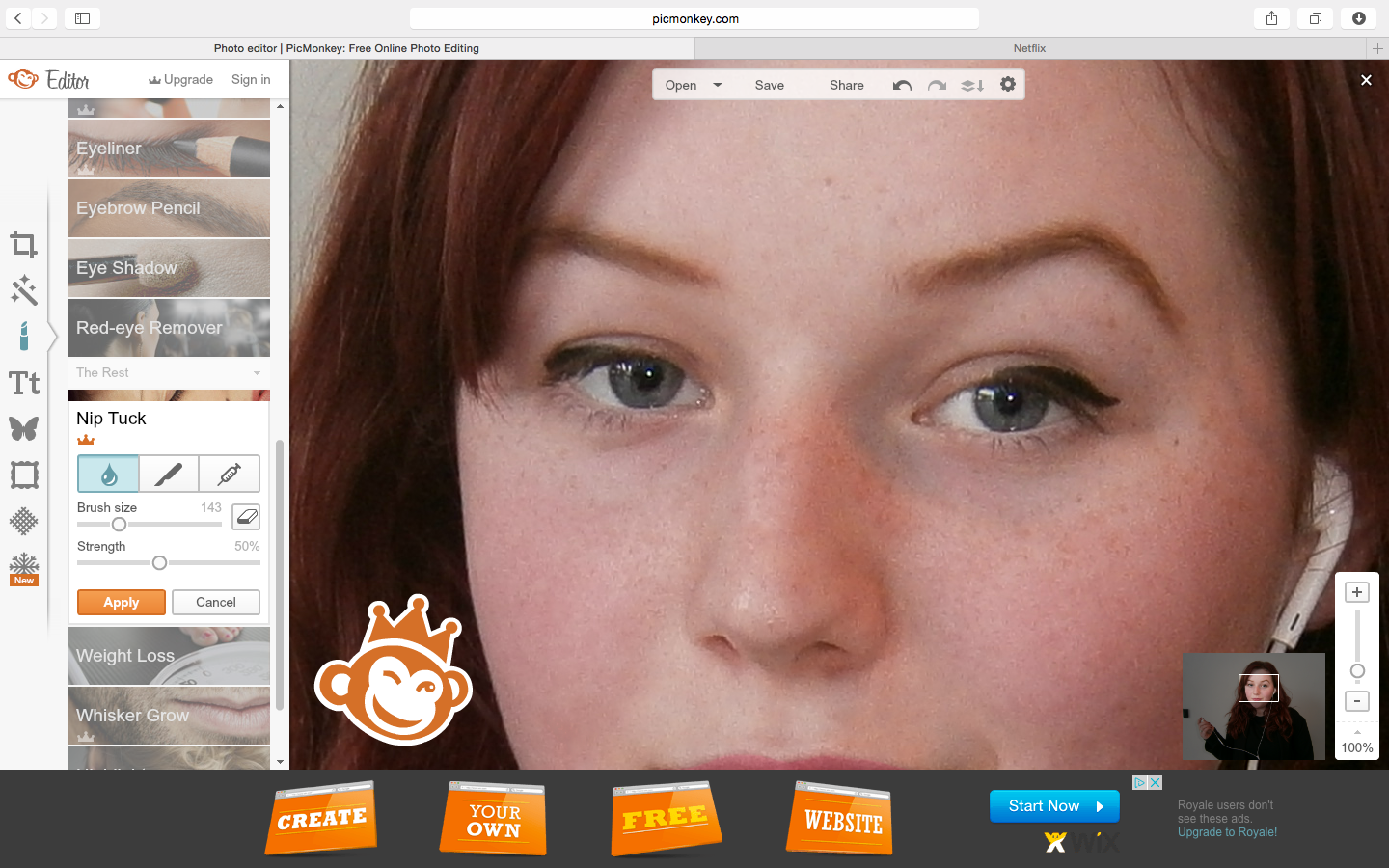
I began by enhancing her skin using the blemish fix tool, as demonstrated by these before and after images.


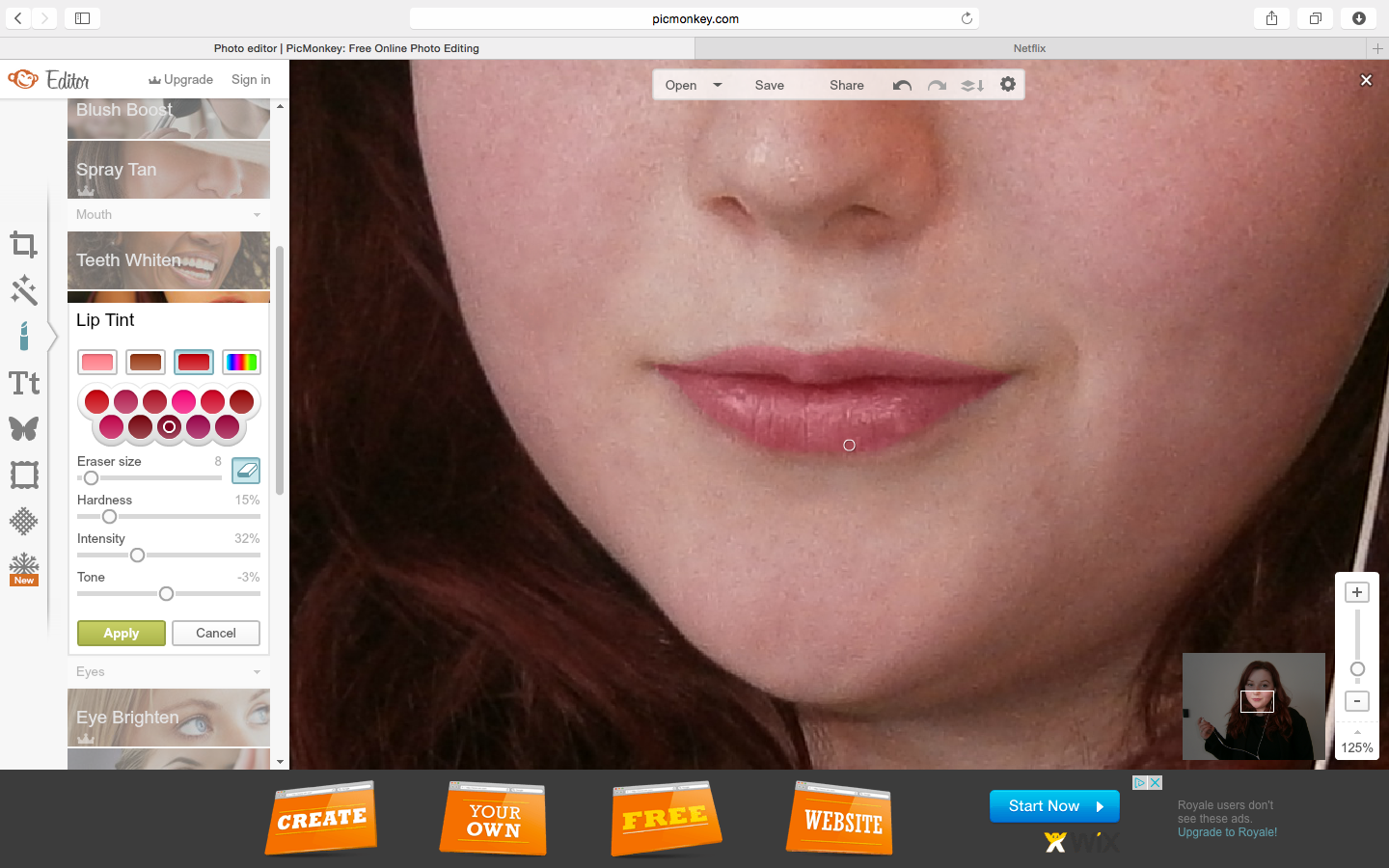
I also added subtle colour to her lips, creating a more bold, colourful and youthful image, relating to my younger demographic.
One of my issues with this image was the fact that her expression was one which was less critical of the media, as my directions were to have a raised eyebrow to demonstrate the theme of the documentary through this symbol alongside the headphones - as by holding one of the headphones away from her ear, this suggests that my presenter has something to criticise about the music industry and media in general. Therefore I used the distort tool to edit a raised eyebrow.

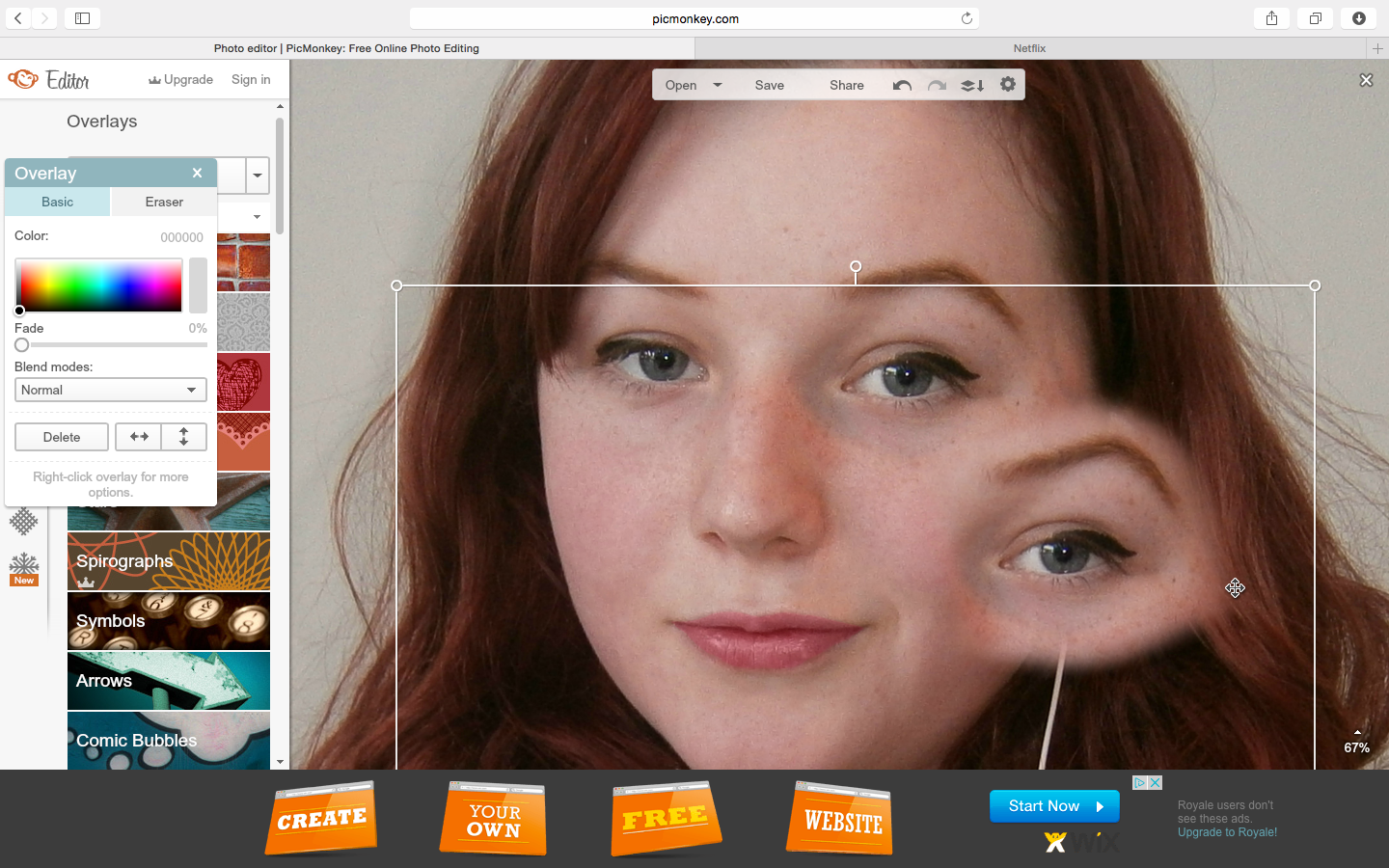
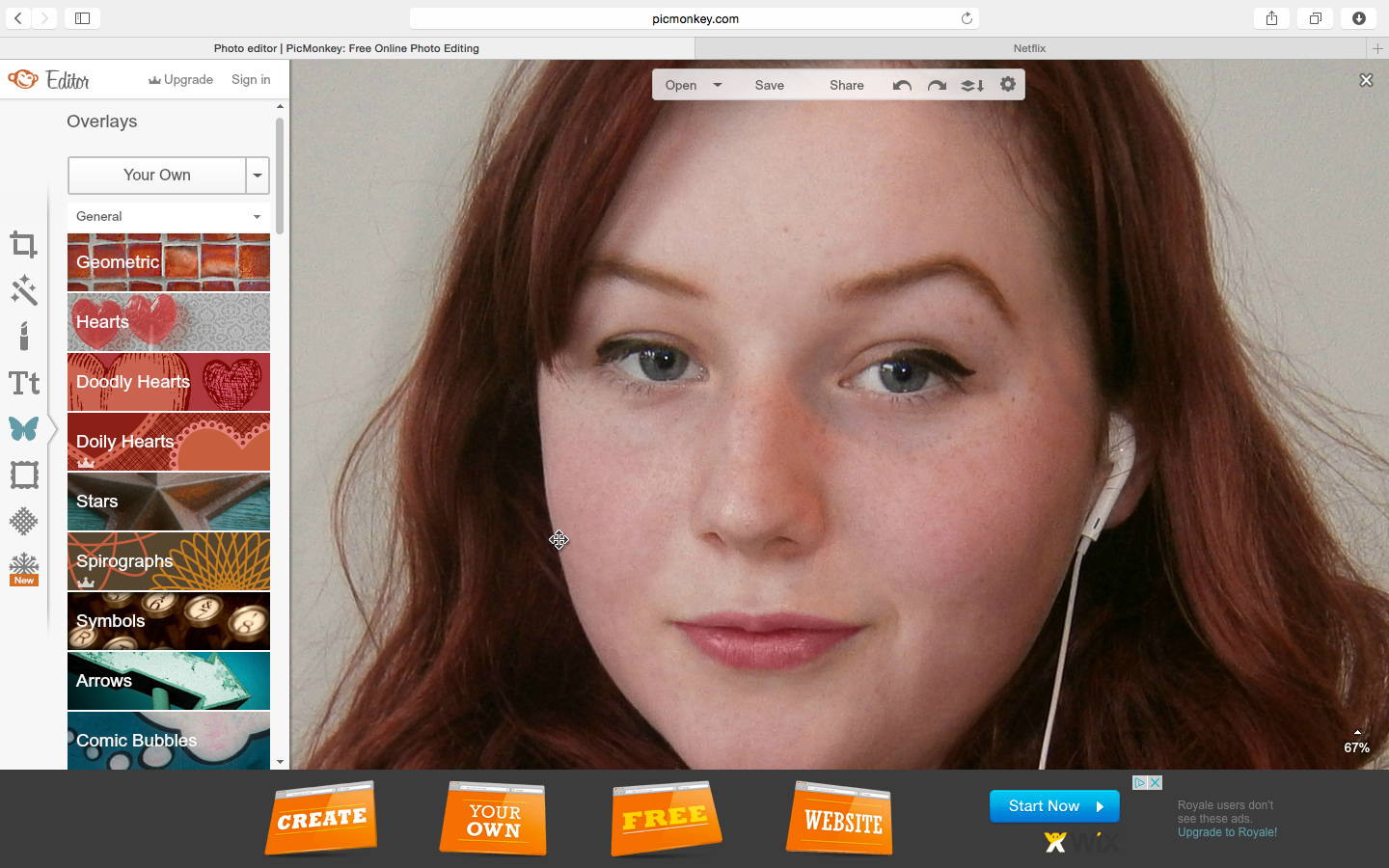
However as this function wasn't accessible to me, I had to screenshot the image at 100% zoom, overlay the screenshot to the original image, erase around the eye/ eyebrow, resize, and add this over the original eyebrow, which was successful for solving this problem.

Final raised eyebrow.

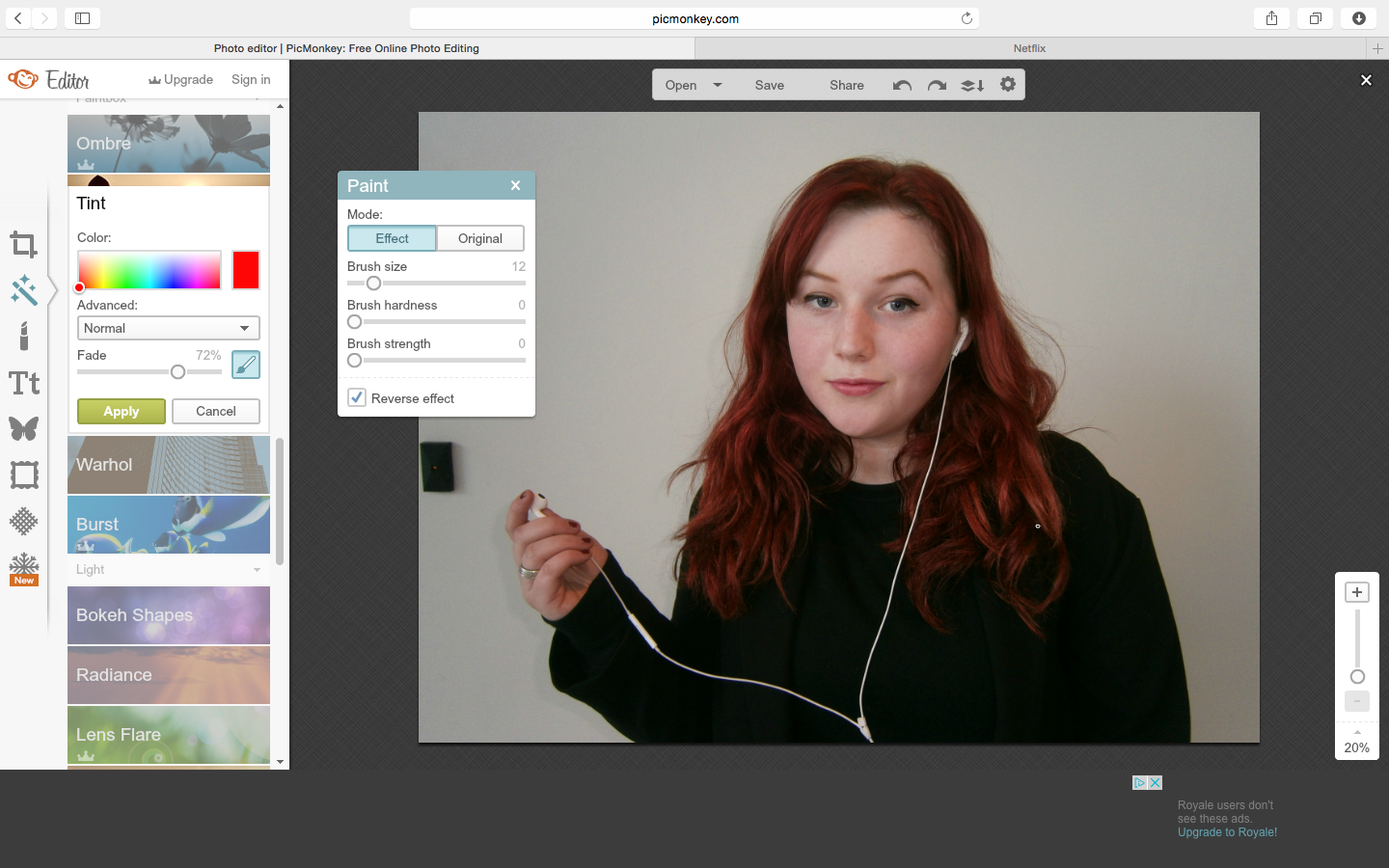
To follow my plan of enhance her bold red hair against the soft, de-saturated background, creating a youthful and stylised look, I used the precisely painted over her hair with the red tint tool.

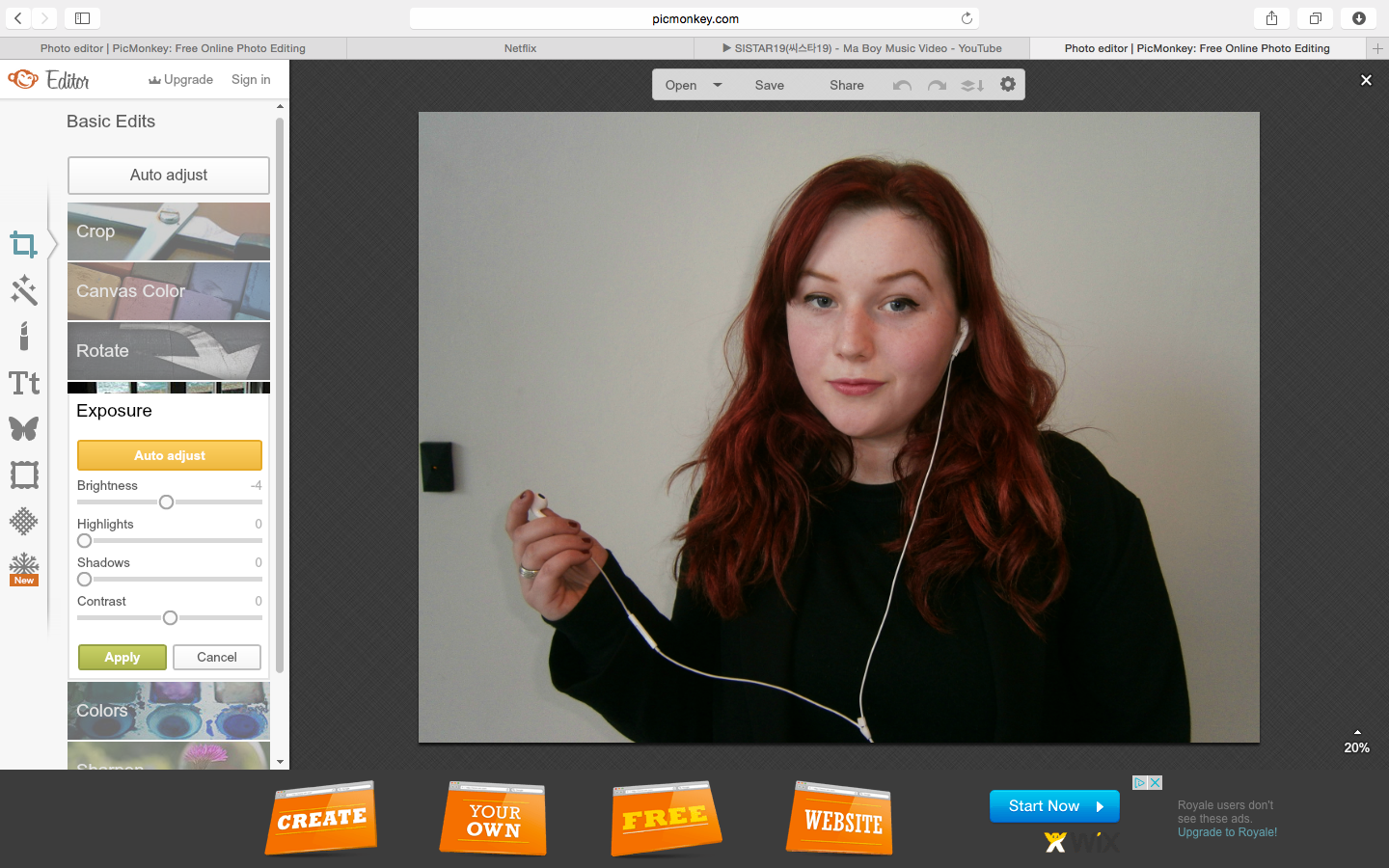
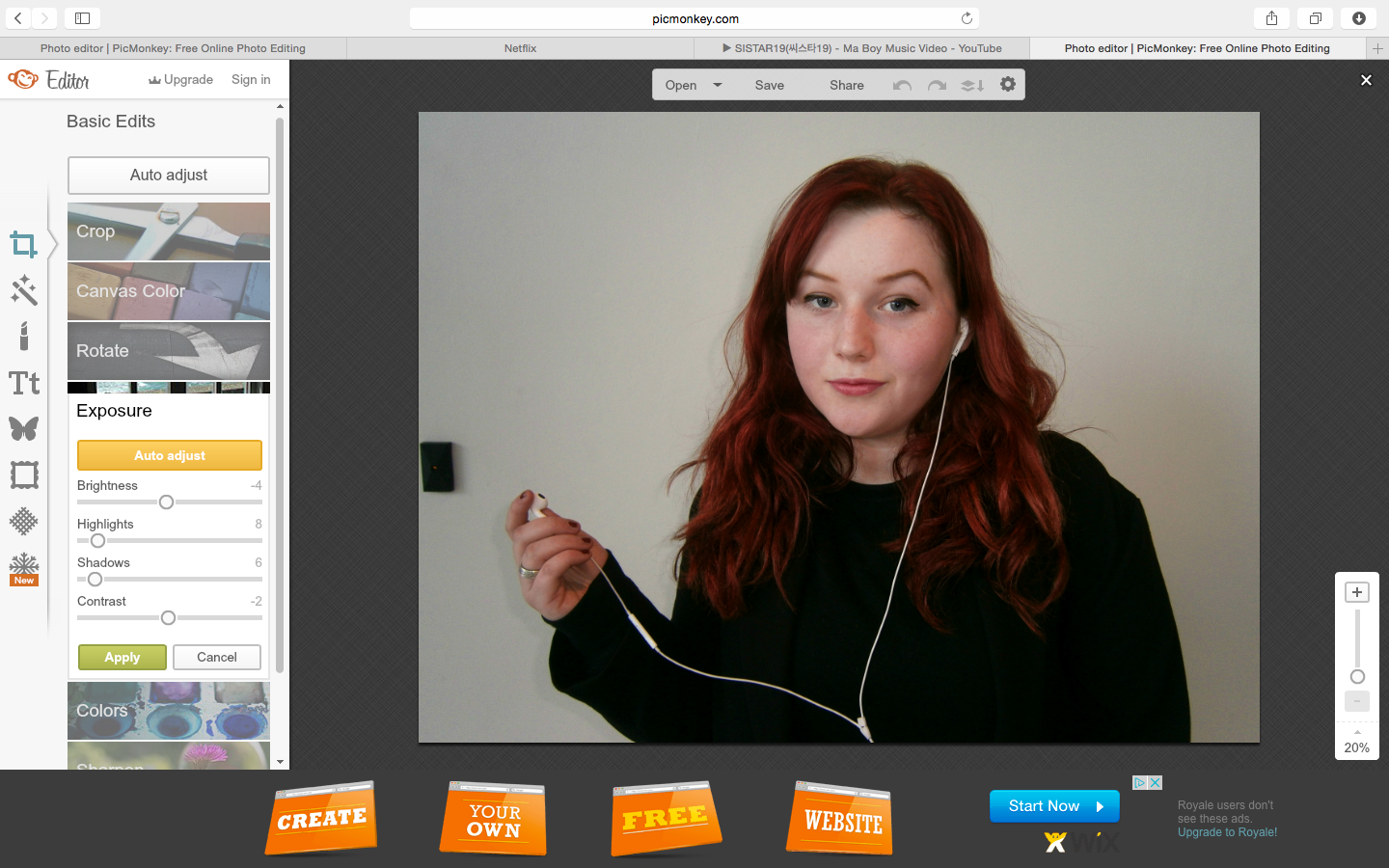
I also experimented with the exposure of the image, and decided to enhance the shadows by reducing brightness, to create a sophisticated, professional background similar to the Channel 4 double page spread within the Radio Times which I am basing my design on.

I also enhanced the colours of this image through the highlights and shadow tools, bringing out the boldest colour of my colour scheme; red.

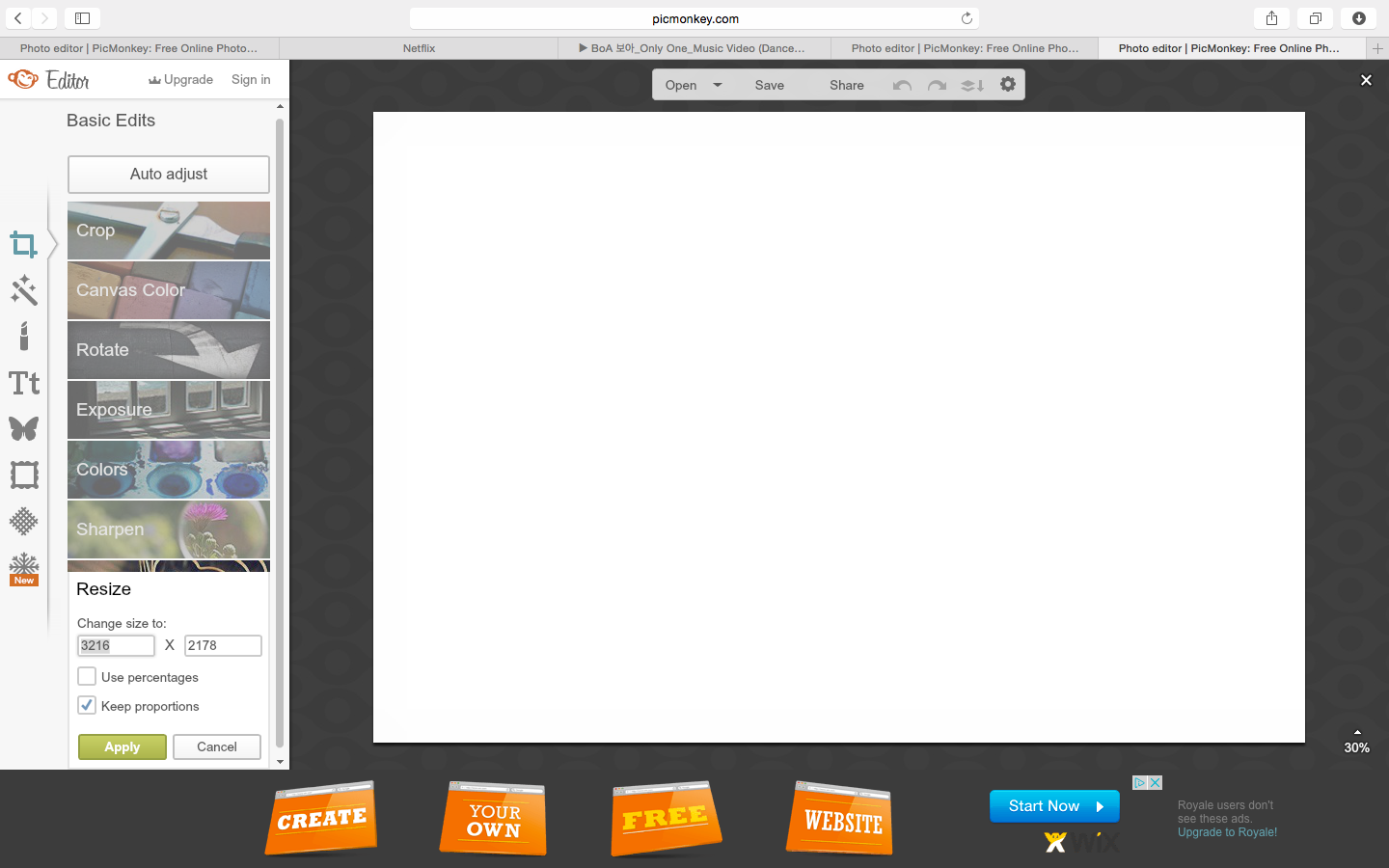
After finishing my edits to the original image which will form the background of my double page spread, I created a new design to create the listings magazine over. I measured the dimensions of a double page of the Radio Times to fit to my exhibitor (w=44cm x h=29.8cm) and resized my canvas to these proportions, with the height as the height of my image to maintain its quality while I edit. I will scale the finished edit to exactly 44x29.8cm using Photoshop.

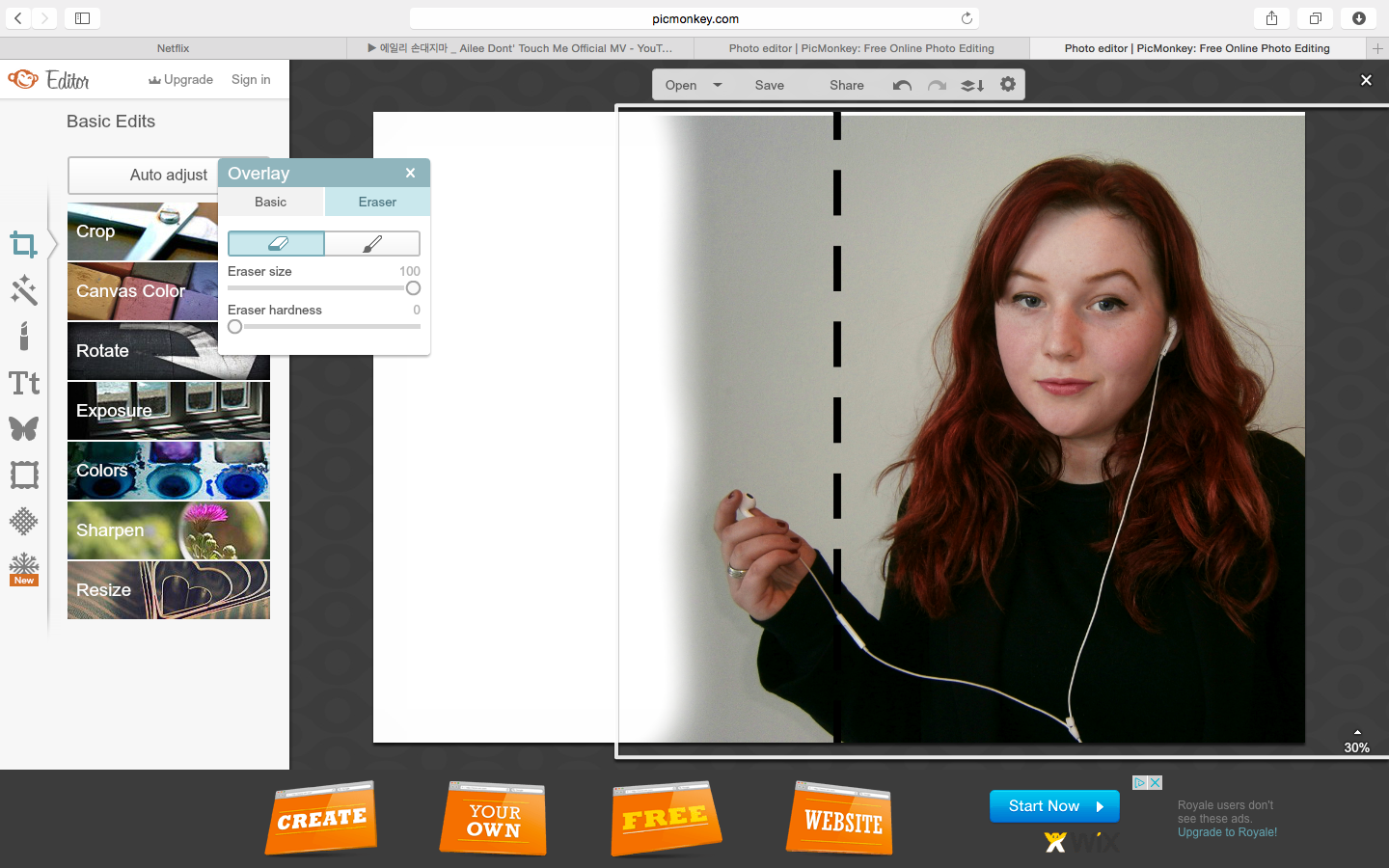
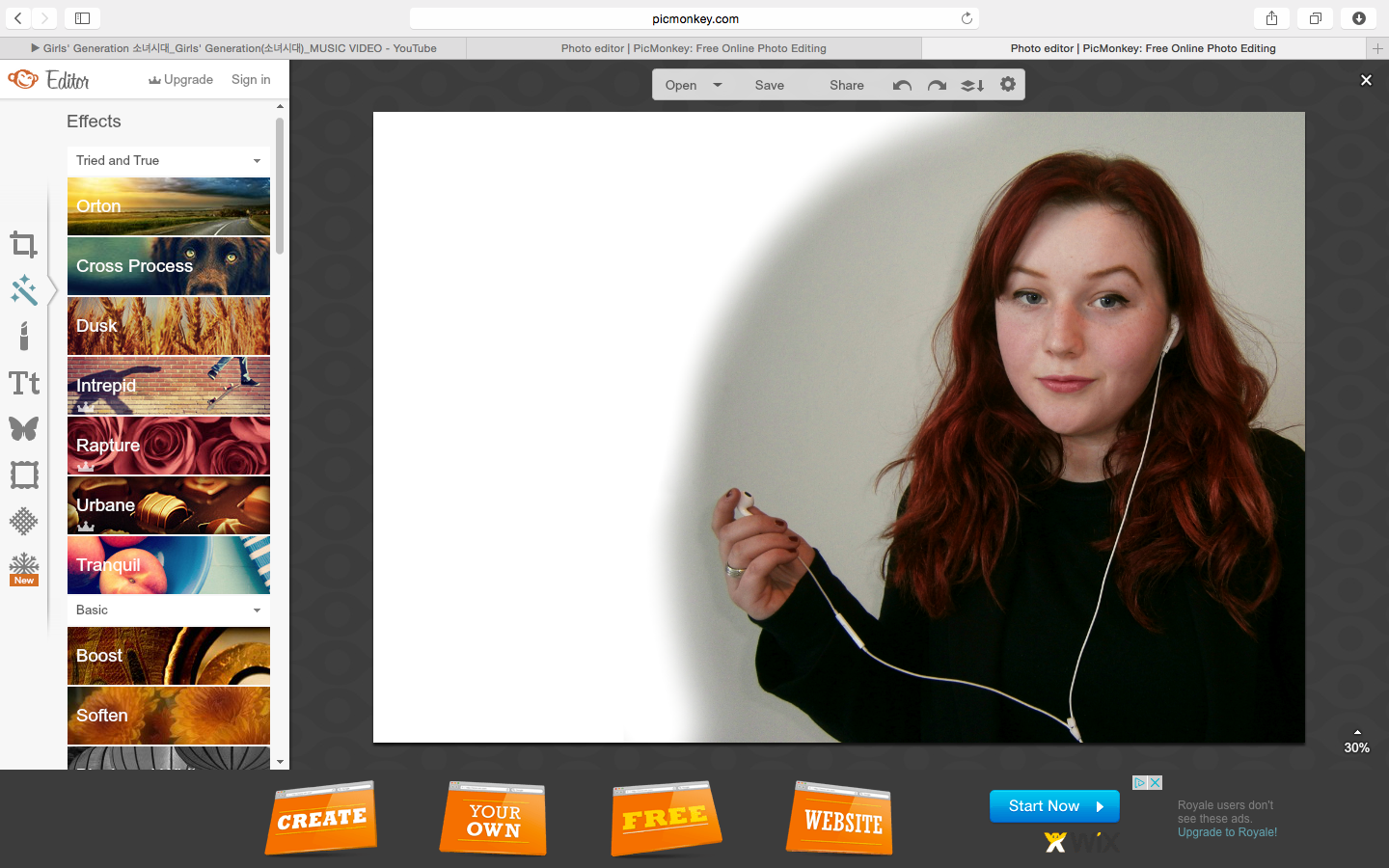
I then added my edited image as an overlay of this canvas to create the bases of the background. Following the layout of Channel 4's double page spread within the radio times, I aligned Rowan's head which is the focal point of my image within the centre of the right page (so that the text is read first on the left), with her headphone holding hand overlapping the left page to draw attention to this mise en scene as it is broken away from the page (similarly to the Channel 4 article image which draws focus to the drugs John Snow is holding). I added a line in the centre of the canvas to divide the two pages precisely whilst I align my image.

I then erased the excess background of the image with soft edges to blend the backgrounds, and in a curve following her body to form an artistic shadow due to the darker shades which will contrast with my grey canvas background.

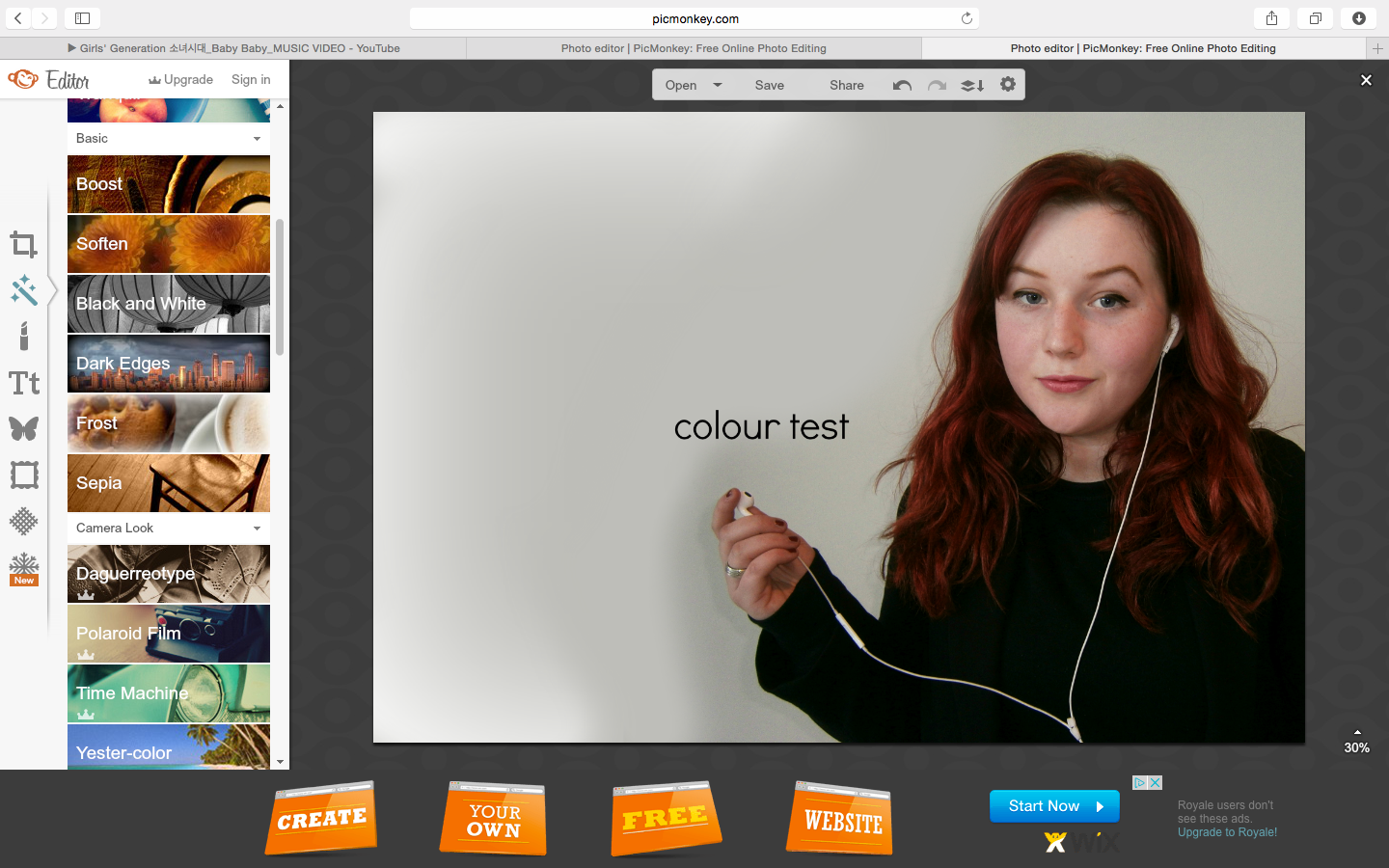
To select a shade of grey which blends with the image background, I used the colour picker tool for changing text colour and copied this colour html code. I then proceeded to blur the edges of the image and background using the soften paint tool, and added a frosted edge precisely using the paint tool to create my planned gradient, shadowed effect - with the lighter background on the left page so that my dark text can be clearly read.

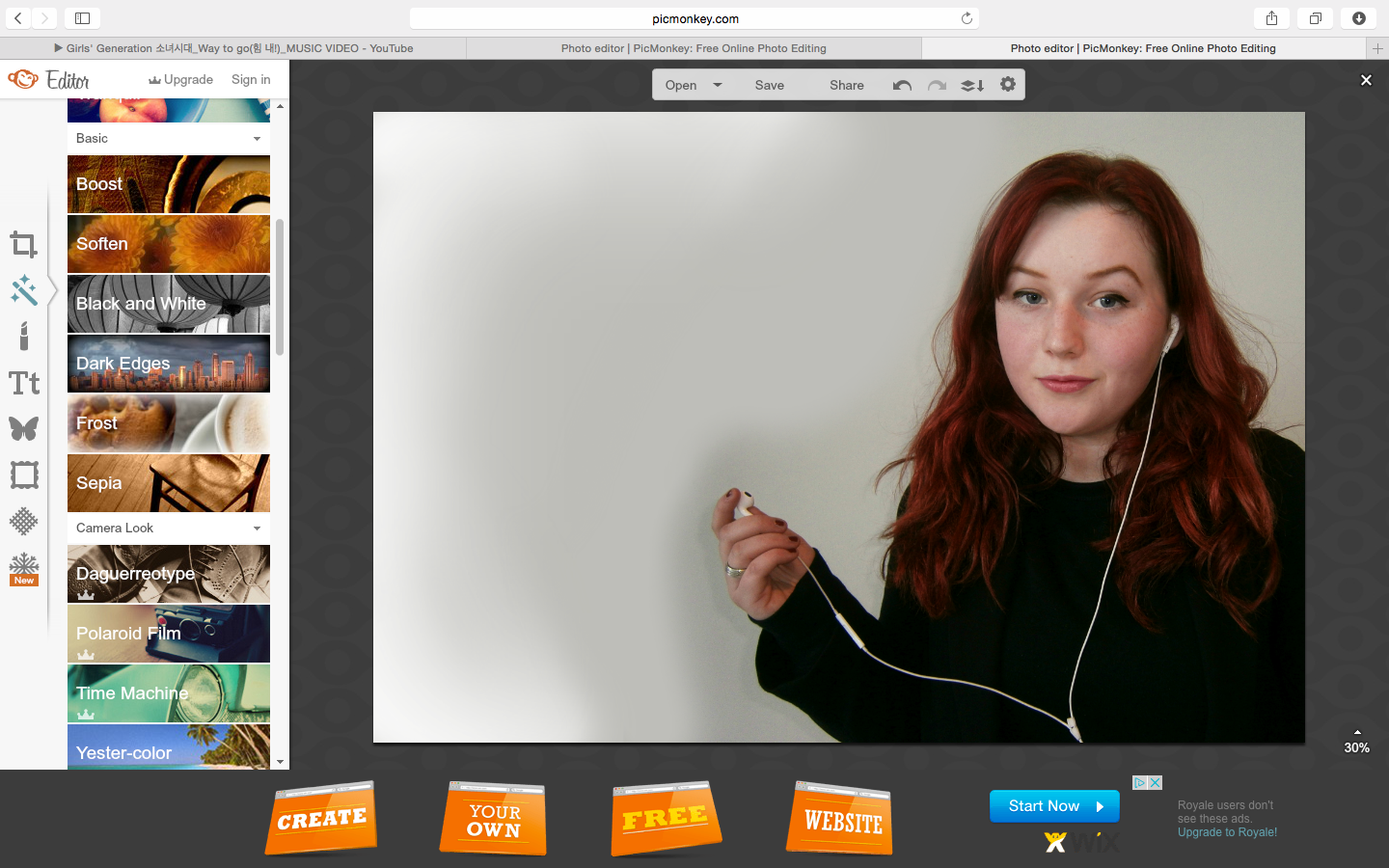
After removing the colour test text and adding more frost to experiment with balancing the light, this is my finished background which I will proceed to add my article, tiles and layout text to (such as page numbers) as planned.

Tuesday, 10 March 2015

Readability of my Products

To test the readability levels of my documentary narration and TV listings magazine article, to determine whether they are appropriate to the understanding of my 17-35 year old, educated and sophisticated target audience, and formal exhibitors, I used a Smog test.
Analysing the readability of a representative extract from my documentary narration.

Readability of half of my TV listings magazine article.

Outcomes:
Documentary -
The SMOG index: 21.9
Total words: 266
Total number of polysyllabic words: 64
Total number of sentences: 11

TV listings magazine -
The SMOG index: 22.9
Total words: 234
Total number of polysyllabic words: 60
Total number of sentences: 9

From this test, this has shown me that my narration and article (with similar Smog test scores) are appropriate for my educated, formal and sophisticated target audience, as well as the formal readers of the Radio Times, and education seeking target audiences of the documentary genre. This is because they are above scores of 17; which is The Guardian and The Telegraph's Smog test scores, who's target readers are similarly formal and educated.
Educated, formal/ upper-class/ high socio-economic, ABC1, and older reader profile for The Guardian - forming a Smog indication of my own target audience.

From the Readability Test article, I also found that darker colours are more difficult to read from, as well as white pages with black font for readers with dyslexia; which is why my TV listings magazine background is light grey with a simple, clear font.

Monday, 9 March 2015

Typography and Titles

I have planned and presented the specification for the house style fonts of all of my ancillary products below using Exam Time.
Mind Map created by courtneyodonnell with ExamTime

Following this plan, I experimented with a variety of Final Cut Pro fonts, and found a thin, elegant and sophisticated font which is most appropriate for my documentary due to its formality and modern, minimalistic, youthful look.
Italicised font to represent the quotation.

Experimenting with a balance of upper and lowercase letters to create my artistic, sophisticated and youthfully modern style which would appeal to both my younger demographic and sophisticated older demographic.

To plan my documentary titles (which will remain the same for my newspaper advertisement, and my listings magazine will include a quotation from the article, according to conventionalities of my products/ exhibitors), I researched current Channel 4 documentary titles in order to choose one which is appropriate for my exhibitor.

I found that these titles most commonly use simplistic language, keywords about the themes or topics of the documentaries, colloquial phrases to relate to their target audience, and are short and punchy (often two words) to create a lasting and memorable effect; such as 'Drugs Live', 'Food Unwrapped', Kids Who Can't Stay Awake', 'Being Bipolar' and 'One Born Every Minute'.

These are my evaluated ideas for titles;
  • 'Sexism and the Media' - unbiased by suggesting there's a relationship but not defining it, presents a debate, but sounds like 'Sex and the City', which is misleading.
  • 'Representing Gender' - ambiguous to create an enigma and present my theme. Gender rather than sexism as it would deter non-feminists (part of my target audience) but attract feminists (also my audience) - less of a balance. It contains two words similarly to Channel 4 and is simple, and also sophisticated to represent my style of documentary, but sounds quite boring - less interesting to potential audiences, unlike 'Blurred Lines: The Battle of the Sexes'.
  • 'Misogynistic Media' - too complicated and strong/ controversial, however the alliteration is persuasive.
  • 'Gender Roles in the Media' - pun of feminist idea of gender roles as well as roles within the media (production, actors, writers, musicians etc.) - represents my two topics. However this pun isn't very obvious and the title is lengthy - less punchy.
  • 'Our Sexist Media' - addresses the audience and engages them, however it sounds like I'm blaming my audience whereas my documentary blames institutions - contradiction.
  • 'Feminism vs. the Media' - appeals to feminists but audiences are often put off by feminism - taboo word which isolates them.
  • 'The Role of Sexism' - suggests that sexism is a major part of the media industry just like production roles - appropriately introduces my documentary without being too obvious. Simple, mono-syllabic and includes a pun (like gender roles) - conventional of my exhibitor.
Therefore in conclusion I have decided to choose 'The Role of Sexism' as my main title due to its appropriateness to both my documentary and my exhibitor, whilst not isolating non-feminists with controversial language, but attracting feminists interested in debates of sexism (my primary, active audience).

I also added a hashtag to my titles, following my main title in structure, in order to market to and engage with my younger audience more interactively through Twitter and Facebook debates and discussions. This would also advertise my documentary through the two-step-flow concept, as followers of social media accounts or users who notice the trend would become curious about the nature of the hashtag and discussions or become interested in the debate - therefore leading them to my production.

Sunday, 8 March 2015

Male Representation Footage

Following the identified for male representation within my documentary from my focus group, I have planned a short shoot within this Prezi presentation to resolve this issue below.

Saturday, 7 March 2015

Resolving my Target Audience Issue

From my interview and focus group research, I have been addressing the possible issue of the older demographic of my 17-35 year old target audience being isolated due to my young, 17 year old presenter. However I found that overall, my target audience is opinionatively appropriate.

It was picked up on that younger people are represented perhaps most strongly through my youthfully fast paced, "choppy" editing style and young cast; however the formal, educated vocabulary of my narration and complex issue in focus will attract older audiences. I also found from my interview with a member of my older demographic that he did not feel isolated by my young presenter, and respected her due to her knowledge and professional deliverance. He also stated that using a young presenter would break the stereotype of young people being less interested or educated on political issues. Therefore, overall I have concluded that my target audience is appropriate, and whilst my younger audience is represented through my youthful documentary style and cast, my older audience is represented equally through my narration, costume and topic.

From the opinions I collected within this research, I've also considered marketing more closely to feminists rather than educating all people on sexism, although my documentary would be more informative to non-feminists. Therefore I've developed my target audience to include an active audience of educated feminists and people interested in sexism or the media, and a passive audience of non-feminists interested in Channel 4's successful expository documentary programming, or curiously attracted through the social media debates featuring my hashtag (two-step flow concept). My active audience will seek to be educated with information which supports their opinions and could be brought into debates and entertained by coverage issues which they are interested or passionate about, whereas my passive audience will be educated on an issue which they were perhaps unfamiliar with, and entertained by the youthful and interesting style/ composition of my documentary. Furthermore, although my documentary is supportive of the feminist perspective as its purpose is to present an awareness of sexism, it considers opposing arguments throughout therefore removing an isolating bias, which could actively attract anti-feminists who will seek to challenge the documentary through debates and social media.

Friday, 6 March 2015

Audience and Exhibition

Using the YouGov website, I researched and analysed the main consumers of my exhibitors in relation to my target audience and productions to determine that they are appropriate and relevant. I have presented this research below using SlideShare.

Wednesday, 4 March 2015

Audio Editing

To add my voiceover of Rowan introducing her interview with Emily over relevant location shots, first I extracted the audio of the voiceover shot, reduced background noise to improve the quality.

After applying the audio reduction to all of my clips, increasing for shots which were particularly lower in quality, I proceeded to add my non-diagetic music by downloading this from my Soundcloud uploads.

For organising the timings of where my music should be positioned, I referred to my shot and script presentation which included this planning. To allow my different music to flow smoothly during changes I applied ducking, which created a soft transition.
Adding my non-diagetic music over my footage

Smoothly fading songs into each other through ducking/ adjusting the volume parametres

Ducking my non-diegetic music to allow my voiceover/ diegetic audio to be emphasised and understood clearly

Further smooth fading between music

To match the tone and tempo of my music to the mood of my footage, I used;
  • A faster building volume and tempo section of 'Hard out Here' for my introduction, which therefore built tension and excitement towards the beginning of my main documentary content. I also timed this music to naturally change from the verse for the main part of my introduction (which I repeated to correspond to my introduction timings by trimming and pasting two complete bars of the music after one another) to the faster, more upbeat chorus for the final part of my introduction which informs the audience of the investigation, and my main title. This change in music not only creates excitement, but indicates the end of the introduction.
  • A slow, fading section of the same music used within my introduction for the end of my documentary extract to form an organised link between the two and indicate that this part is finished, and flow to the TV adverts through the relaxed tempo.
  • I have used trimmed and pasted repetitions of slow tempo sections of my music for most of my narration and interviews to prevent drawing focus away from it with distracting music.
  • I have indicated the changes between the sections of my main content through smoothly transitioning between the different music at these points.
  • Similarly to the building of tempo and volume of my introduction, I have applied this to the second to last shot of my documentary to create excitement for the conclusion of this part.